Empowering Women in India’s Workforce for Viksit Bharat 2047

“The future of India depends on women’s progress. Life skills are foundational abilities that help women make informed decisions, manage challenges, and achieve sustainable livelihoods. This blog shows how life skills, employability support, and digital skilling can transform the lives of underserved women. It highlights impactful initiatives of the government and the role of Magic Bus in promoting women-led growth, working towards the vision of Viksit Bharat 2047.”
India’s ambition to become a $30 trillion economy by 2047 cannot be realized without unleashing the full potential of its women workforce in India. As per World Bank data, only 35% of Indian women participate in the workforce, compared to global rate of 55%.
Closing this gap could unlock 145 million additional workers and drive 45% of India’s future economic growth, according to research by Bain & Company and Magic Bus.
Yet, for millions of women across India, the path to employment is filled with roadblocks, from limited access to education and mobility, to lack of digital access, mentorship, or safety. This is where life skills and employability training can be transformative.
This blog explores why women’s skill development is essential, how life and employability skills can change lives, and what it will take to close India’s gender gap.
The Workforce Gap: Why Women’s Participation Matters
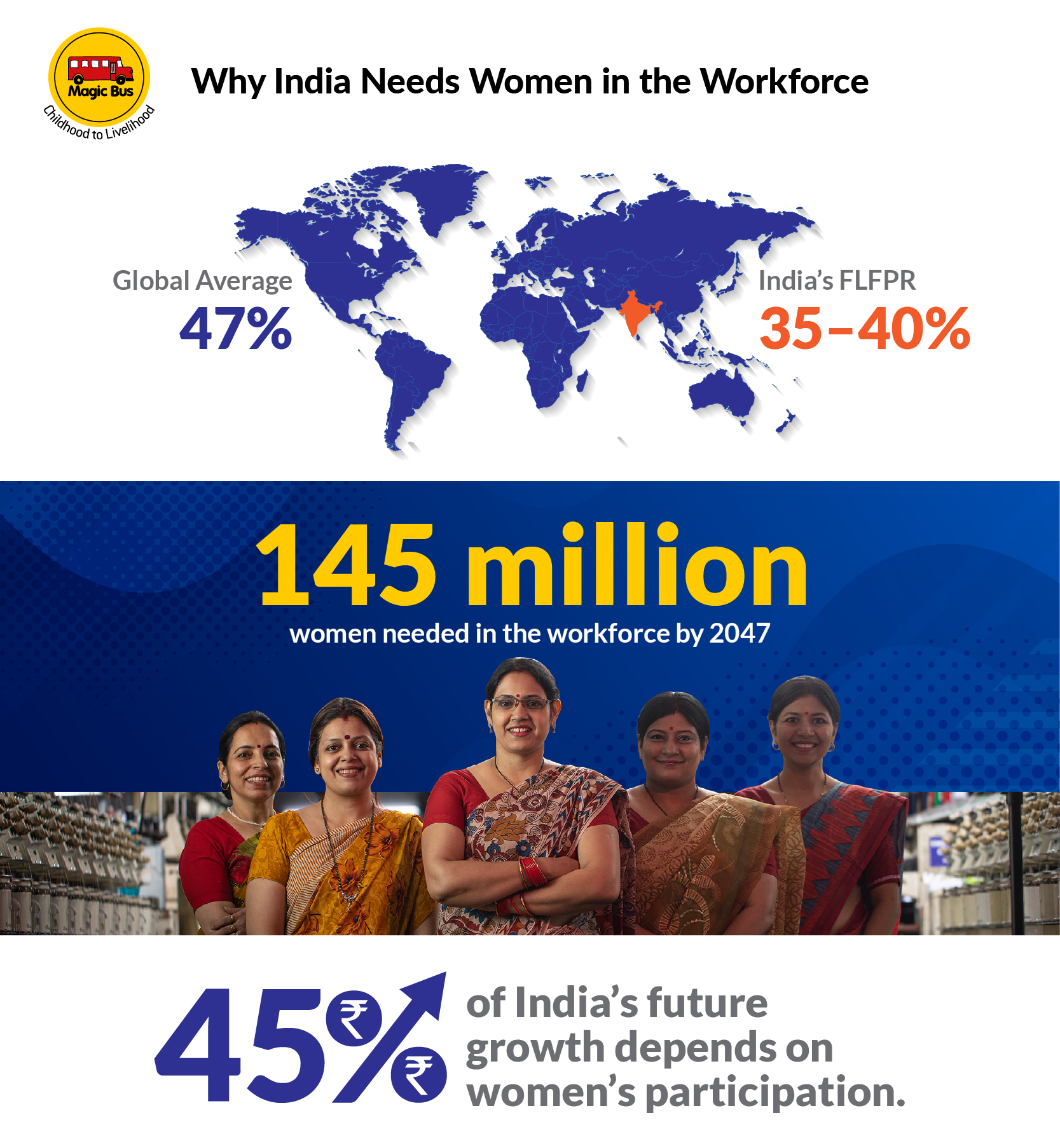
Women are the backbone of India's growth journey. With a 96% increase in female employment in rural areas, and the number of women-led MSMEs nearly doubling, women are driving national progress.
Government efforts are fostering a inclusive ecosystem for women workforce in India.
- According to EPFO, 1.56 crore women have stepped into the formal workforce in the past 7 years.
- From 2017-18 to 2023-24, women’s unemployment rate decreased from 5.6% to 3.2%.
- There has been a 429% increase in gender budgets over the past decade.
- Female entrepreneurship is supported by 70 central schemes and about 400 Stat-level schemes.
India’s Female Labour Force Participation Rate (FLFPR) stands at 35%, while the global rate is 55%, according to World Bank. For economic progress, it is recommended to increase FLFPR India 2047 to 70%.
From Skilling to Sustained Livelihoods
Creating jobs is not enough for increasing women workforce in India. The focus must shift to sustainable, inclusive, and future-ready livelihoods. At Magic Bus, we believe in building foundational ecosystems for long-term participation of women in India’s economy.
Four Pillars That Ensure Long-Term Impact:
- Employability skills, life skills integration across education and training
- Financial literacy + entrepreneurship to enable self-employment
- Mentorship and community networks for ongoing support
- Digital skilling and AI-readiness to prepare women for future jobs
Goals of the Viksit Bharat Vision for Women Workforce
The ambitious vision of Viksit Bharat expands its focus from women development to women-led development, keeping the following goals in mind:
- Position women as key leaders of national growth
- Boost economic self-reliance and entrepreneurship of women
- Increase female labour force participation rate to 70%
- Eliminate barriers to sustained work participation
While India makes significant progress in supporting women workforce in India, certain challenges need to be addressed to keep up the momentum:
- Travel options to the office can be unsafe and time-consuming.
- Many workplaces don’t give childcare support.
- Social barriers and cultural norms reduce job opportunities.
- Many girls drop out of school at the secondary level.
- Financial help and skill training isn’t easily accessible.
These challenges reduce women’s participation in the formal economy. Collective efforts are needed to remove these barriers to entering the workforce.
Key Government Initiatives, Policies and Focus Areas
The government is committed to building an enabling ecosystem for women to achieve their entrepreneurial goals and build sustainable careers. Some of the impactful policies are given below:
| Government Initiative | Focus Area |
| Startup India | Empower women entrepreneurs through social inclusion |
| Deendayal Antyodaya Yojana – NRLM | Provide sustainable livelihood opportunities to women |
| Drone Didi | Equip women with resources to achieve sustainable progress |
| PM Mudra Yojana | Increase self-employment among women through financial inclusion |
| Jan Dhan Yojana | Provide access to credit and insurance services for women |
| Mahila Samriddhi Yojana | Help women from poor backgrounds start small-scale activities |
| National Rural Livelihood Mission (NRLM) | Help women from rural areas move out of poverty through sustainable livelihood |
| Women Entrepreneurship Platform | Provide funding support, market access, mentorship for women entrepreneurs |
From Barriers to Breakthroughs: Real Stories from Magic Bus
Behind every percentage point of FLFPR lies a story of perseverance. Take Padma, a young woman from Pargaon district in Maharashtra, running her dairy venture. Once worried about societal pressures, she took a leap of faith and joined the Magic Bus Livelihood Programme. She aspires to start another business and support her family.
“Magic Bus gave me the confidence to speak up and start my business,” says Padma, a Magic Bus entrepreneur from Maharashtra.”
Another story of resilience is that of Shabnam, who used Magic Bus’s Entrepreneurship Development Programme to start her own career coaching centre. Gaining business skills and knowledge, she overcame the demolition of her first business venture and launched her business to overcome the skills gap and support women in Viksit Bharat.
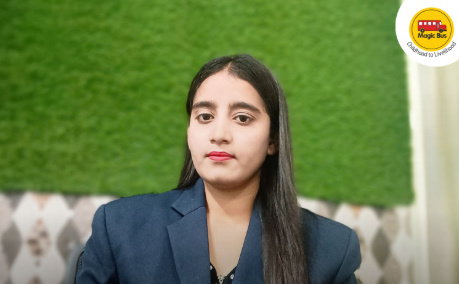
These are not one-off stories; they represent a scalable transformation model backed by partnerships, pedagogy, and outcomes.
Skilling Alone Is Not Enough: Why India Needs Supportive Infrastructure?
India’s strong schemes like Jan Dhan Yojana, Mahila Samriddhi Yojana, NRLM, and the Women Entrepreneurship Platform are game changers. But skilling alone isn’t enough.
Women From Underserved Communities Need:
- Digital tools & access
- Income building opportunities
- Re-entry programmes
- Supportive ecosystem
Magic Bus advocates for these enablers in every state it works in. Through skilling programmes, government collaborations, community-level interventions, and institutional partnerships, the skilling NGO India is committed to driving more women into the workforce.
Why Corporates Are Backing Women-Led Growth: Magic Bus Partnerships
Magic Bus partners with some of India’s most respected corporates, like IndoSpace, AU Small Finance Bank, Infosys Foundation, and FedEx, Mondelez, to co-create scalable programmes for women workforce in India, ensuring measurable impact.
What Our Partners Value:
- Retention-focused models: Our Skill Impact Bond tracks impact based on job retention metrics
- Clear outcome tracking: 70% youth attained jobs, participants grew their income
- Women-focused skilling at scale: Over 60% participants in our programmes are girls
- Custom co-branded campaigns: Ensuring visibility and impactful storytelling
CSR isn’t just compliance; it’s a national investment strategy.
Together, we can create a generation of skilled, confident, and future-ready women - Partner with Magic Bus.
How Magic Bus is Bridging the Rural–Urban Divide
One-size-fits-all policies don’t work.In rural India, women face self-esteem issues, gender bias, safety concerns, and lack of digital access. In urban areas, it’s often wage gaps, skill mismatch, or lack of re-entry pathways after career breaks.
Magic Bus is a life skills NGO in India that adapts its delivery model for rural, peri-urban, and urban regions. Its skilling centres, strategically located across India, focus on:
- Mentoring first-generation salary earners in metro cities.
- Exploring different avenues for job creation in rural areas
- Developing skills tailored to different job segments
- Post-placement support to enable job retention
How Does Magic Bus Support Women from Underserved Communities?
Magic Bus address systemic barriers faced by women workforce in India through targeted interventions. It loops in relevant stakeholders to remove hurdles for women’s career growth.
- Through the Livelihood Programme, Magic Bus provides training in technical skills, teaching life skills for women in India.
- The Entrepreneurship Development Programme (EDP) of Magic Bus has empowered many women from rural areas to run sustainable businesses.
- With the Young Women Fellowship Programme, women receive valuable guidance to start enterprises and move out of the cycle of poverty.
- The FutureX platform of Magic Bus reimagines access to skilling and career pathways, harnessing the power of AI to support women.
These initiatives reflect the commitment of Magic Bus in strengthening India’s vision of women-led development under Viksit Bharat 2047. With Magic Bus, young women’s aspirations are being nurtured.
Investing in Her Future: How You Can Be a Catalyst of Change
In summary, increasing female workforce participation is not just an economic goal but a moral and developmental imperative for India 2047.
By empowering women workforce in India with the right life and employability skills, we’re not just helping individuals, we’re securing the future of our nation.
When one young woman gains confidence, a skill, and a job she lifts not just her family, but her community and country.
With your support, we can move from women development to women-led development, a cornerstone of Viksit Bharat 2047.
Every ₹ you give fuels a woman’s journey from learning to earning. Donate Today.
Frequently Asked Questions
Back